How to Make Masala Chai from Scratch
Masala chai looks simple and quietly isn't. Boil tea, add milk, toss in spices — that is the whole idea, and yet the cup that comes out is often thin, harsh, or cloyingly sweet compared with the one you remember from a roadside stall or a friend's kitchen. The difference is almost never the recipe itself. It is the order of operations, how long the spices sit on the heat, and the ratio of water to milk.
What Actually Makes Chai, Chai
First, a small piece of housekeeping: chai means tea. So "chai tea" is the same as saying "tea tea." What most of us mean is masala chai — spiced tea — and it is built from four things working together: a strong black tea, milk, whole spices, and a sweetener.
The tea matters more than people expect. You want something sturdy enough to stand up to milk and a fistful of spice. Assam is the standard choice, whether CTC (the small pellets that give a thick, malty body) or orthodox leaves. Nilgiri works well too and tastes a little cleaner. Darjeeling, lovely as it is, tends to vanish under milk — save it for a plain cup.
The technique is what separates a good cup from a mediocre one. Spices go into cold water and come up to a boil with it. Tea goes in next, and only after the water has taken on colour and aroma. Milk comes last, because milk scorches easily and because once it's in, you can't taste what the tea is doing anymore.
Build Your Own Spice Blend
You can absolutely buy a pre-ground chai masala, and some of them are decent. But the blend is the part worth making yourself, and it takes ten minutes. Here is a starter formula that makes roughly eight to ten pots.
A good beginner blend
- 12 green cardamom pods, husks left on
- 1 cinnamon stick, about 2 inches, broken into pieces
- 6 whole cloves
- 1 teaspoon black peppercorns
- 1 teaspoon fennel seeds
- Optional: 1 star anise, a small shard of nutmeg, 1 dried bay leaf
Warm a dry pan over medium-low heat and toast the whole spices for a minute or two, shaking the pan, until they smell fragrant. Pull them off before they darken — burnt spice is bitter and there's no fixing it. Let them cool completely, then grind to a coarse powder. A mortar and pestle or a spice grinder both work; just stop before you reach dust. A fine powder clouds the cup, slips through the strainer, and can leave a chalky mouthfeel.
Store the blend in a small airtight jar out of the light and use it within about two months. Whole spices keep far longer, so if you only drink chai occasionally, grind a smaller batch.
Ingredients for Two Cups
- 1½ cups water
- 1 to 1¼ cups whole milk
- 2 heaping teaspoons loose Assam tea, or 2 tea bags
- 1½ to 2 teaspoons of your masala blend
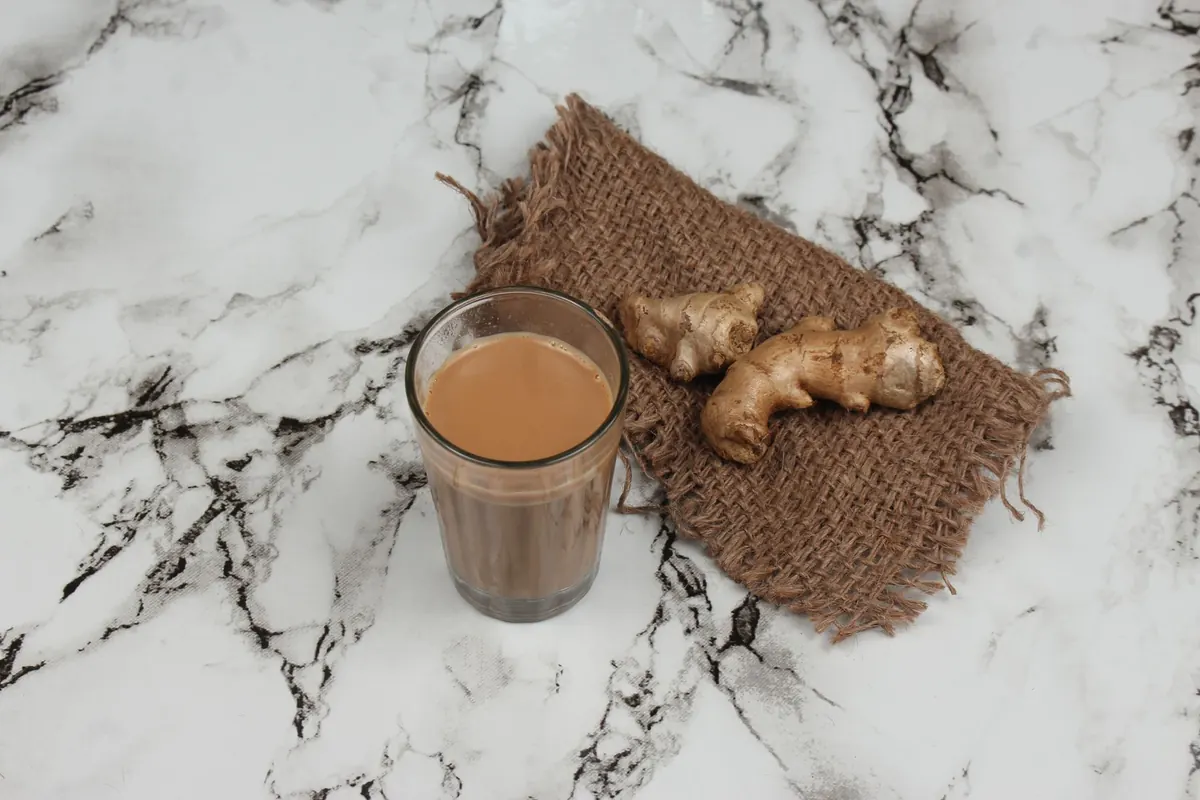
- 1 inch fresh ginger, crushed or grated
- 2 to 3 teaspoons sugar, or to taste — jaggery works beautifully here
- A tiny pinch of salt
Whole milk gives the roundest cup. Skim milk tastes watery and separates more readily. Plant milks work, but handle them gently — see the notes below.
The Method, Step by Step
- Start with water and spices. Pour the water into a small saucepan and add the ginger, masala blend, and that pinch of salt. Bring it to a boil, then lower the heat and let it simmer for two to three minutes. This is the step people skip, and it's the reason their chai tastes flat.
- Add the tea. Stir in the tea leaves and bring it back to a gentle boil for one to two minutes. The water should turn a deep, dark red-brown. If it's still weak-looking, give it another thirty seconds.
- Pour in the milk and sugar. Bring the pot back up until it's bubbling gently at the edges. Don't walk away — this is the moment it climbs the sides of the pan.
- Simmer for three to five minutes. Keep the heat low enough that it rises and falls without boiling over. Stir occasionally. The chai is ready when the colour settles into a warm caramel-tan and the foam on top looks thick and slightly grainy.
- Pull the chai. Ladle some out and pour it back in from a height, three or four times. Traditional vendors do this to aerate the tea and build a foamy top; it also drops the temperature to something drinkable.
- Strain and serve. Pour through a fine sieve into cups, pressing the leaves lightly with the back of a spoon. Don't squeeze hard — that releases tannins and turns the cup bitter.
If the chai looks pale beige, it needs more time, not more tea. Let it simmer another minute and check the colour again.
Fixing What Goes Wrong
- Bitter: the tea boiled too long, or there's too much of it. Keep the leaves on the heat for a few minutes total, not ten.
- Weak and thin: usually skim milk, or milk added before the tea had a chance to steep.
- Gritty: the masala was ground too fine, or you used too much. Dial back by half a teaspoon.
- Curdled or split: most often old milk, or a plant milk hitting a hard boil. Lower the heat and add plant milk once the tea has already boiled and settled.
- Dusty, dull flavour: stale spices. Re-toast and grind a fresh batch.
A skin forming on top is normal — it's the milk proteins. A quick stir before serving sorts it out.
Variations Worth Trying
Once the basic method is in your hands, play with it. Adrak chai doubles the ginger and drops the fennel for a sharper, more warming cup. Elaichi chai uses cardamom alone, which is delicate and excellent after a heavy meal. A fennel-forward blend tastes sweeter and needs less sugar. Swapping white sugar for jaggery adds a soft caramel note that suits cold evenings.
For an iced version, brew the chai stronger and with less milk, chill it thoroughly, then pour it over ice with a splash of cold milk. And if you're sensitive to caffeine, remember that a long-simmered chai delivers a fair amount of it — the evening pot is often better made with a lighter hand on the leaves.
Making It a Habit
The honest truth is that the first pot will probably be fine and the fourth will be good. Keep the spice blend in a jar on the shelf, keep ginger in the freezer so you always have it, and pay attention to colour and aroma rather than the clock. Every stove runs differently, and every household wants a different ratio of water to milk — some prefer a light, tea-forward cup, others want it almost custard-thick. Adjust a quarter cup at a time until it tastes like yours.
Write your final numbers on the lid of the spice jar. Two months from now, you won't have to think about it at all.
Photo: Abhinav Singh / Pexels
Seasonal Tea Blending: How to Mix Your Own Spring, Summer, Fall, and Winter Blends
Build your own spring, summer, fall, and winter tea blends using a simple parts-based formula, seasonal...
8 Common Tea Brewing Mistakes and How to Fix Them
Bitterness, flatness, and watery cups usually trace back to eight fixable habits — water quality,...
About Us