8 Common Tea Brewing Mistakes and How to Fix Them
A good cup of tea is easy to ruin and just as easy to fix. Most disappointing brews don't come from rare leaves or expensive equipment; they come from a handful of small habits — water that tastes of the pipes it travelled through, a kettle that never cools down enough, leaves left sitting long past their best minute. The encouraging part is that these mistakes are predictable. Once you know which one is flattening your cup, the correction usually takes less than a minute, and you can taste the result in the very next steep.
Mistake 1: Water You Wouldn't Drink on Its Own
Tea is almost entirely water, so whatever is in the water ends up in the cup. Chlorine, iron, and heavy mineral content can make a lovely oolong taste chalky or faintly metallic. Heavily softened water is another quiet culprit: with the minerals stripped out, it can feel slippery and leave the tea tasting thin and hollow.
The fix: pour a glass of your tap water, let it come to room temperature, and taste it. If you wouldn't happily drink it, don't brew with it. A simple carbon filter handles most chlorine and odour problems, and filtered or bottled water with modest mineral content brews well. Distilled water is best avoided — it makes tea taste oddly empty. If your area's water is extremely hard, try a jug filter and compare two cups side by side; the difference is usually obvious.
Mistake 2: Water That's Too Hot or Too Cool
Boiling water straight onto delicate green tea is the classic error. The bitterness comes from the same compounds that give a tea its briskness, and heat pulls them out fast. Go too cool, though, and black tea or roasted oolong turns out thin, sour, and strangely hollow — the water never has enough energy to draw out the sweetness.
A rough temperature guide
- Green tea and many yellow teas: about 70–80°C (160–175°F)
- White tea: about 75–85°C (170–185°F)
- Oolong: about 85–95°C (185–205°F)
- Black tea: about 90–96°C (195–205°F)
- Pu-erh and most herbal infusions: a full boil
No thermometer? Let the kettle rest after boiling: roughly two to three minutes for greens, one to two for whites, and thirty to sixty seconds for oolongs. Pouring the water into a cool pitcher or cup first drops the temperature quickly too. Once you've brewed a tea at the right heat, you'll recognise the sweetness that was missing before.
Mistake 3: Steeping by the Clock Instead of by Taste
Set a timer, walk away, come back to a bitter cup. Astringency often arrives in the last twenty or thirty seconds of a steep, which is why a tea that was perfect yesterday tastes harsh today — the leaves were slightly stronger, the water slightly hotter, the mug slightly smaller.
The fix: taste early and often. Start checking at the low end of the range — around a minute for green tea, two for black — then decide whether to keep going. The moment it tastes good, get the leaves out of the water. A basket you can lift, a strainer, or a gaiwan all do the job. And resist pressing the leaves or squeezing the bag against the side of the cup; that releases a final surge of tannins you can't take back.
Mistake 4: Measuring Leaves With a Soup Spoon
A teaspoon of fluffy white tea and a teaspoon of tightly rolled oolong weigh very different amounts, so scooping by volume alone makes it hard to repeat a good cup. As a starting point, a rounded teaspoon — roughly two to three grams — per 200 ml mug works for most whole-leaf teas. Broken-leaf teas and fannings need less; large, airy leaves need more volume to reach the same strength.
Then adjust by taste rather than by rule. Weak and watery at the correct temperature? Add leaf. Bitter even after a short steep? Use less. Keep your measurements consistent for a week so you can tell which change actually helped. A small kitchen scale removes the guesswork entirely if you want to chase a favourite cup properly.
Mistakes 5 and 6: A Cold Pot and Crowded Leaves
The cold pot problem
A cold teapot or mug steals heat from the water the moment you pour. Your first infusion ends up brewing several degrees cooler than you intended, which is why the same tea can taste better on the second round. Rinse the pot, gaiwan, or mug with hot water before brewing. It takes ten seconds and keeps both temperature and aroma where you want them.
The crowded basket problem
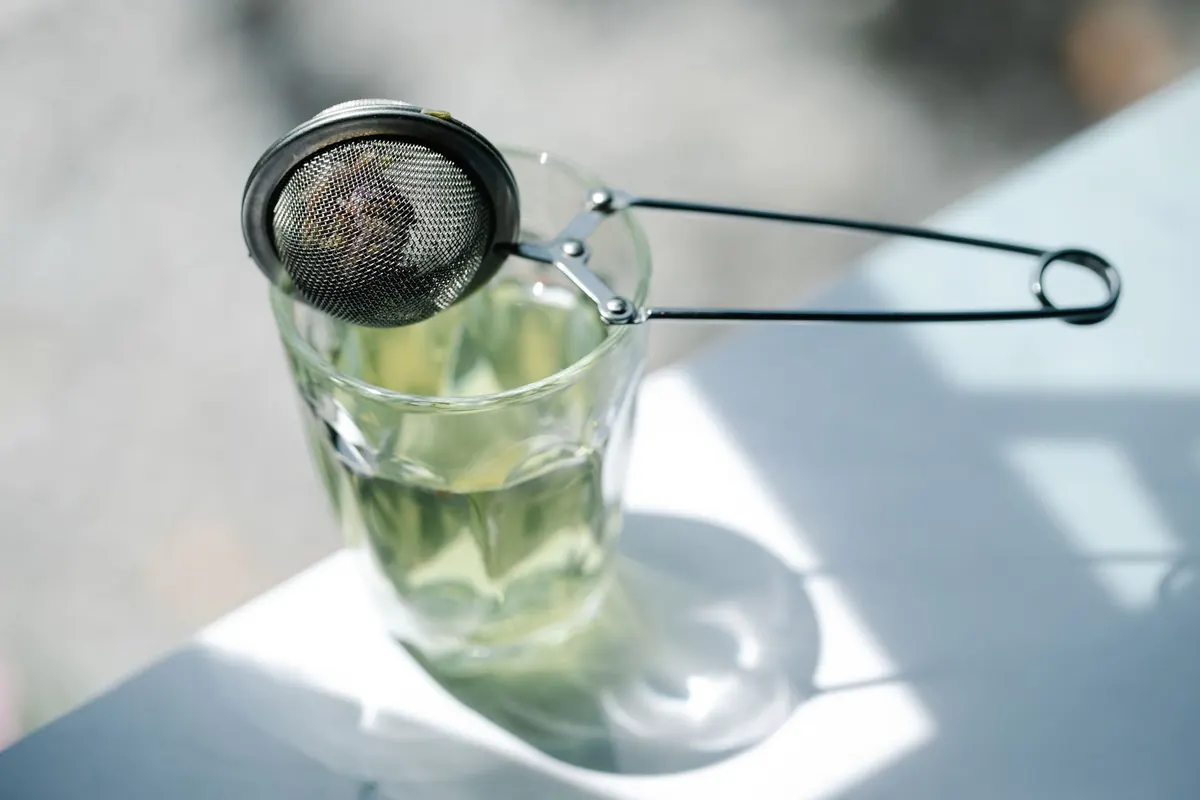
Dry leaves can swell to several times their size. If your infuser basket is packed to the rim, the leaves expand into a solid block and the water can't move through them — you get a weak first steep and a fiercely bitter second. Use half the leaf, or a bigger vessel. Loose leaves in a roomy teapot or gaiwan will always brew more evenly than a fistful jammed into a tiny ball infuser.
Mistakes 7 and 8: Poor Storage and One-and-Done Leaves
Tea is sensitive to light, heat, air, moisture, and strong smells. A tin left on a sunny windowsill or beside the spice rack will fade within weeks, and a smoky lapsang stored next to a delicate green will quietly ruin it. Keep tea airtight, cool, and dark, and buy amounts you'll finish in a few months rather than a year's supply.
The last mistake is throwing away leaves that still have something to give. Whole-leaf teas often yield three or more enjoyable infusions. Add roughly fifteen to thirty seconds to each subsequent steep and keep the water hot. Broken leaves and most flavoured blends fade after one or two rounds, so use your judgment. Don't leave wet leaves sitting in the pot for hours — they turn sour — and compost them once they're spent.
A Simple Reset
If your tea has been disappointing lately, change one thing at a time rather than overhauling everything at once:
- Taste your water at room temperature, and switch to filtered if you don't like it.
- Drop the temperature by around 10°C for green and white teas.
- Cut your first steep short and taste at the one-minute mark.
- Rinse the pot with hot water before you brew.
- Keep the leaf quantity the same for a week so you can judge what changed.
Note what improved, keep it, and move on to the next variable. Within a week you'll have a brewing routine built around your own taste rather than someone else's chart — which is exactly where a good cup of tea starts.
Photo: UltraWorldJY / Pixabay
Seasonal Tea Blending: How to Mix Your Own Spring, Summer, Fall, and Winter Blends
Build your own spring, summer, fall, and winter tea blends using a simple parts-based formula, seasonal...
Tea Infusers Compared: Basket, Ball, and Silicone Models
A practical comparison of basket, ball, and silicone tea infusers, covering leaf room, cleaning, and which...
About Us